
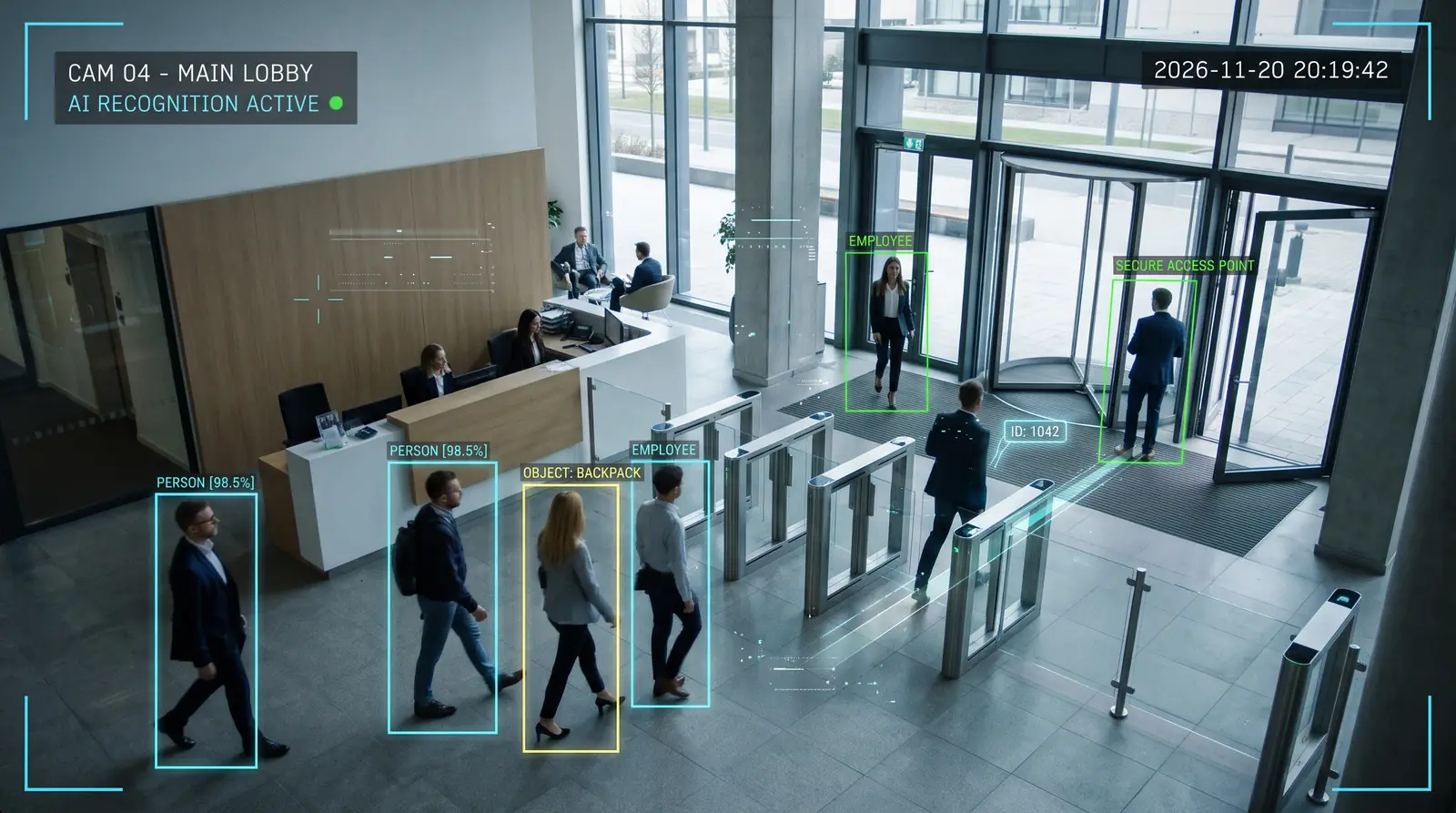
A condominium is a different problem from a single-tenant office. Instead of dozens of staff on one schedule, you have hundreds of residents who come and go on their own schedules, regular turnover as units sell or re-rent, and a mix of private, shared and visitor-facing spaces that each need their own rules.
Every door and area is its own zone
A condo access plan usually covers several distinct zones, each with different rules for who gets in and when:
- Exterior entrances and lobby doors
- Parking garage and vehicle gates
- Amenity rooms such as the gym, party room or pool
- Elevators, where supported by the elevator control system, access control can be integrated to restrict a resident's credential to their own floor or building
- Mailrooms and parcel rooms
- Loading docks and moving-day access
Visitor entry and intercom
A video intercom at the main entrance lets a visitor call a unit, and lets the resident see and release the door remotely from a phone or an in-suite handset. Whether this ties directly into the same access-control system as resident fobs, or runs alongside it, depends on the specific intercom hardware and access-control platform in the building; we review this during planning rather than assuming every product line integrates with every other.
Centralized administration residents and management can live with
The main reason buildings move away from mechanical keys is administration. With a managed system, property management can issue or cancel a resident's credential at move-in or move-out from one place, without rekeying a single lock. Lost fobs are deactivated the same way.
Audit trails, used correctly
Most systems log when a credential was presented at a reader. That log can help a board or property manager look into a propped door, a noise complaint or a parcel-theft report, by showing which credential was used at which door and when. It is a useful record, not a conclusive one: it does not by itself prove who was carrying the credential or what happened afterward. Who can view that log, and how long it is kept, should follow the building's own policies and any applicable privacy requirements.
Credential types
Cards and fobs issued at move-in remain the most common option for condos. Mobile credentials and visitor codes are available on some systems and suit some buildings well, but whether they fit depends on the platform in use, so we confirm this for your building rather than assuming it.
Retrofitting an older building
Many condo access-control projects are retrofits of an aging or proprietary system. Existing door hardware and wiring can sometimes be reused, but controlled doors on fire-rated walls or main egress routes have real requirements around fail-safe versus fail-secure operation, fire-alarm interfacing and code compliance. We assess each door rather than assuming it can simply be reused.
Brands we install for condominiums
Kantech, CDVI, Keyscan and Dormakaba for access control, and ICT or Akuvox for intercom and door hardware, depending on what fits the building.
See our access control and card access pages, or our guide to access control for offices, small businesses and condos if you are comparing against a single-tenant workplace.
Planning a project in Newmarket or the Greater Toronto Area? Contact Pitbull Security Solutions or call 647-895-1815 (answered 24/7) for a consultation.